Introduction · Southwest United States
Diné (Navajo)
Diné, “the People” in their own language, Diné bizaad; “Navajo” is the name the wider world uses.
One of the two largest Indigenous nations in the United States, nearly 400,000 citizens, on a homeland in the Four Corners country that they were marched away from once, and won back.
Preliminary researchHow to read this
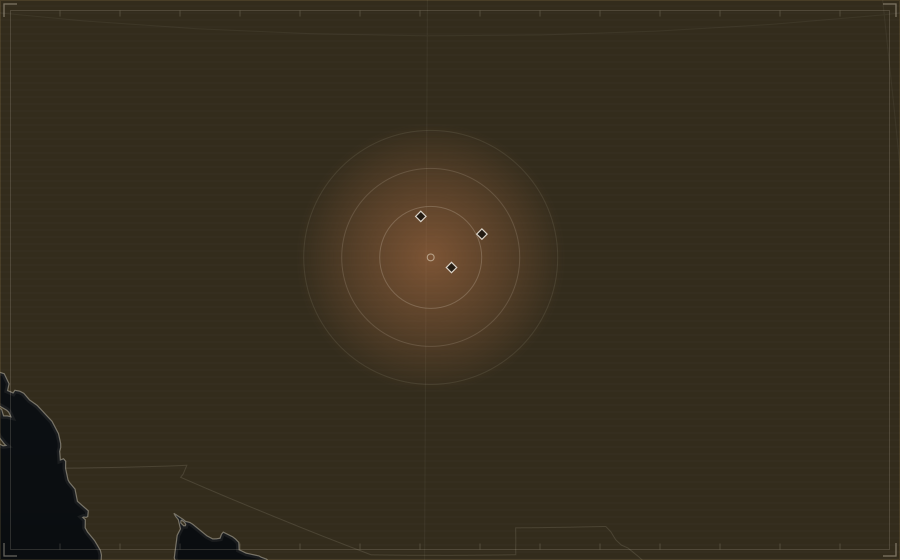
Diné Bikéyah, the Diné homeland, lies between four sacred mountains in the high desert where Arizona, New Mexico, Utah and Colorado meet. The Navajo Nation that governs much of it today is the largest reservation territory in the United States, and its 399,494 enrolled citizens (2020) place the Diné among the country's largest tribal nations.
In 1864 the United States army burned Diné fields and marched thousands of people to Hwéeldi, Fort Sumner, New Mexico, the trauma remembered as the Long Walk. The treaty of 1868 did what almost no other treaty of that era did: it brought the people home. In the Second World War, Diné Code Talkers built an unbroken battlefield code from Diné bizaad, the same language federal boarding schools had punished children for speaking.
Diné bizaad remains the most spoken Native language in the United States, with roughly 170,000 speakers, taught from immersion schools to Diné College, the first tribally controlled college in the country. The Nation governs from Window Rock with its own council, courts and media.
This is an introduction, the first layer. A full collection, like the Mapuche collection that opened this atlas, follows as research and review are completed for each people.
- Where
- Diné Bikéyah / the Navajo Nation: Arizona, New Mexico, Utah
- Language
- Diné bizaad: roughly 170,000 speakers, the most spoken Native language in the United States
- Nation
- 399,494 enrolled citizens (2020): among the largest US tribal nations