Peoples
One people at a time, done properly
This index will grow collection by collection. Each people joins with researched, sourced and reviewed content, depth before breadth, and never a page that pretends to more than it knows.
Introductions
Sourced introductions to the peoples already on the Atlas, each the first layer of a collection to come.
- Introduction
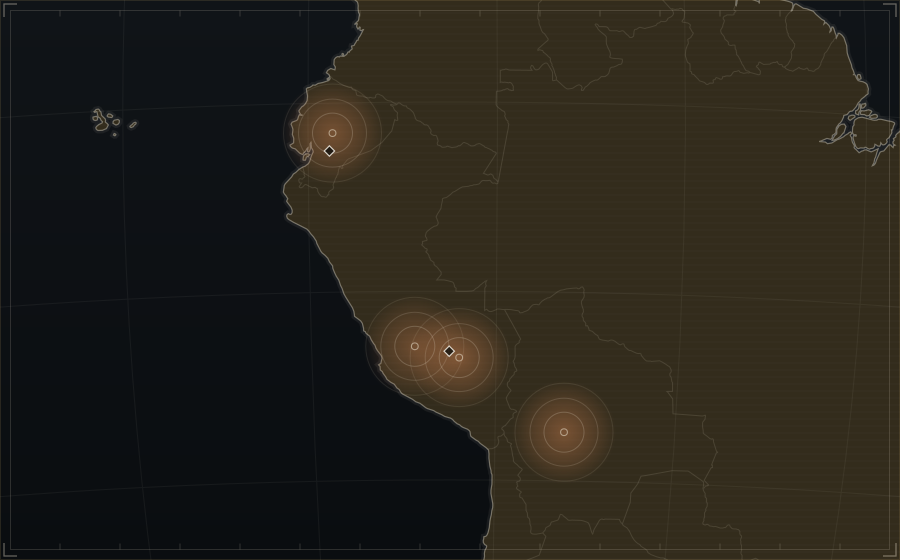
Quechua peoples
Andes: Peru, Bolivia, Ecuador and beyond
The most spoken Indigenous language family in the Americas, and the millions of people across the Andes who carry it, from highland farming communities to the great neighbourhoods of Lima, Cusco and La Paz.
Read the introduction → - Introduction
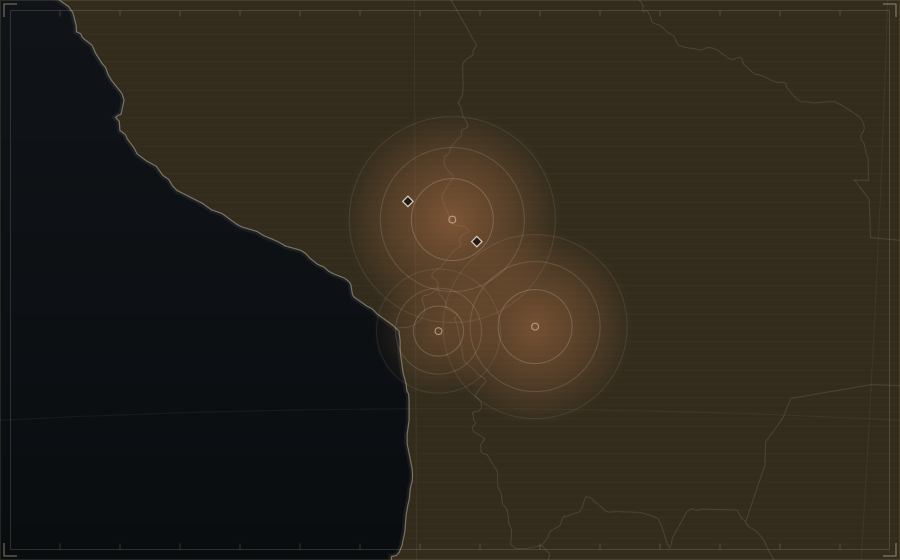
Aymara
Altiplano: Bolivia, Peru, northern Chile
The people of the high plateau around Lake Titicaca, more than two million people across Bolivia, Peru and northern Chile, farming and herding some of the highest worked land on Earth.
Read the introduction → - Introduction
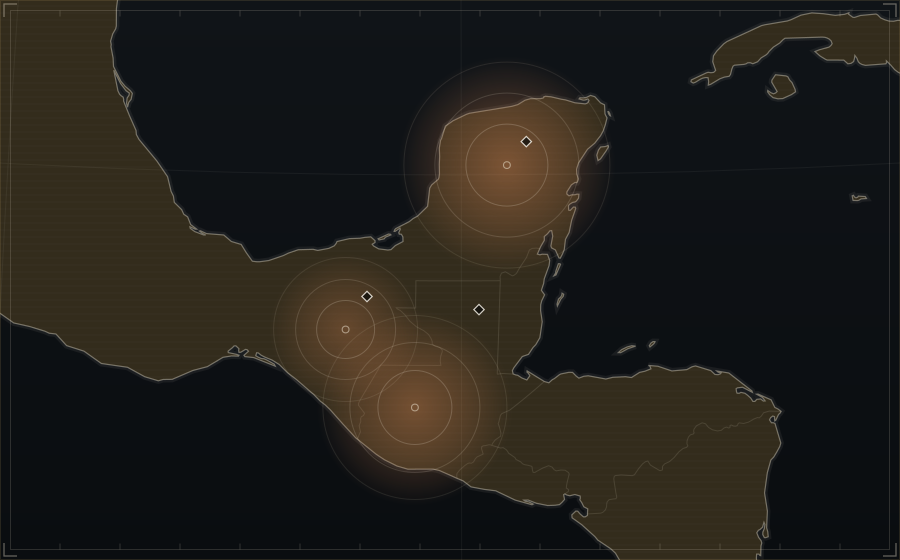
Maya peoples
Mesoamerica: Guatemala, Mexico, Belize, Honduras
Not one people but many, speakers of some thirty related languages across Guatemala, southern Mexico, Belize and Honduras; heirs of one of the world's great civilisations, and emphatically present tense.
Read the introduction → - Introduction
Diné (Navajo)
Southwest United States
One of the two largest Indigenous nations in the United States, nearly 400,000 citizens, on a homeland in the Four Corners country that they were marched away from once, and won back.
Read the introduction → - Introduction
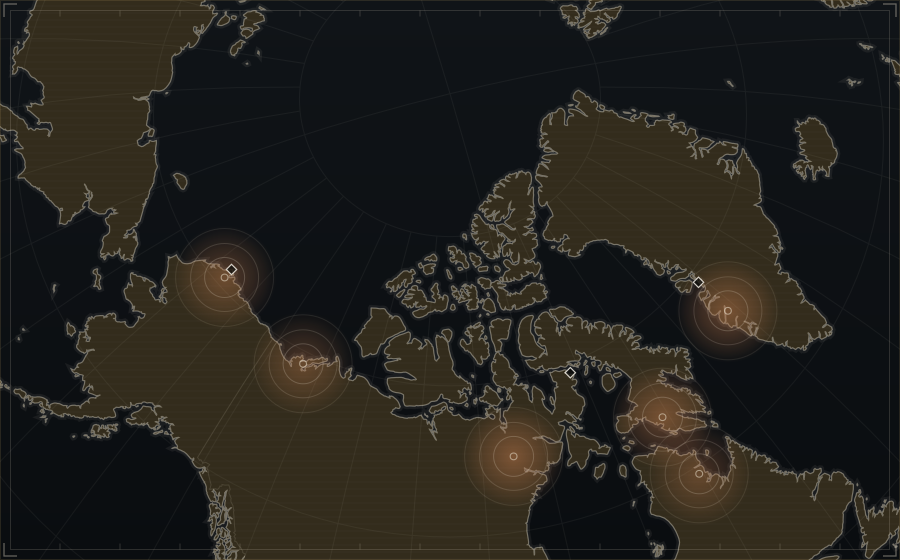
Inuit
Across the Arctic, from Alaska to Greenland
The people of the circumpolar Arctic, from Alaska across Canada to Greenland, bound by related languages, a shared maritime culture, and modern institutions of self-government that reach across four national borders.
Read the introduction → - Introduction
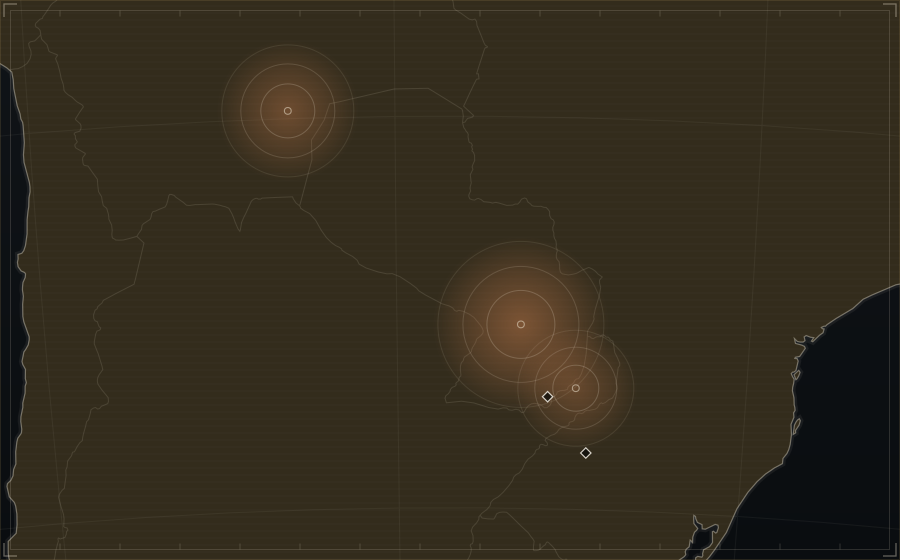
Guaraní
Paraguay, Brazil, Argentina, Bolivia
The peoples of the forested lowlands where four countries meet, and the source of something unique in the hemisphere: an Indigenous language spoken by an entire nation.
Read the introduction → - Introduction
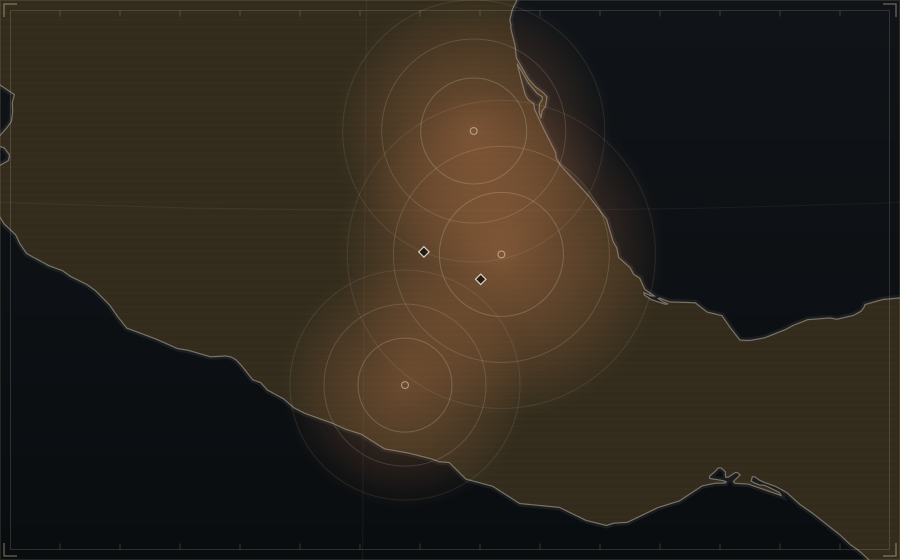
Nahua peoples
Central Mexico: Huasteca, Puebla, Guerrero and beyond
The largest Indigenous language community in Mexico, more than 1.6 million Nahuatl speakers, living where their ancestors built the city the Spanish made their capital on top of.
Read the introduction → - Introduction
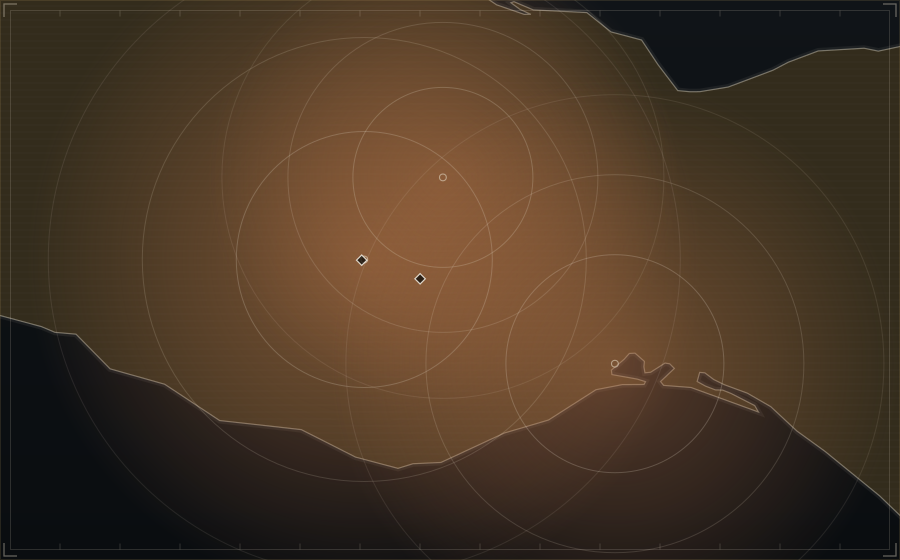
Zapotec peoples
Oaxaca, Mexico: valleys, sierra and isthmus
The people of the Oaxaca valleys, sierra and isthmus, builders of one of Mesoamerica's oldest cities, and speakers of nearly half a million Zapotec voices today.
Read the introduction → - Introduction
Wayuu
La Guajira: Colombia & Venezuela
The most numerous Indigenous people of both Colombia and Venezuela, herders, weavers and traders of the desert peninsula their border crosses but never divided.
Read the introduction → - Introduction
Cherokee
Oklahoma & the southern Appalachians, United States
The largest tribal nation in the United States by enrolment, a people removed from the southern mountains by force in 1838, who rebuilt a capital, a press and a school system in the west within a decade.
Read the introduction → - Introduction
Anishinaabe
Great Lakes: Canada & United States
The people of the Great Lakes country, hundreds of First Nations and tribal nations around Superior, Huron and Michigan, in one of the largest Indigenous worlds north of Mexico.
Read the introduction → - Introduction
Haudenosaunee
New York State, Ontario & Quebec
The confederacy of six nations whose Great Law of Peace has governed from the longhouse for centuries, and whose ideas about federal union entered world history.
Read the introduction → - Introduction
Lakota, Dakota & Nakota
Northern plains, United States & Canada
The nations of the Seven Council Fires, whose defence of the northern plains and of the Black Hills runs from Little Bighorn to the courtroom, and has never ended.
Read the introduction → - Introduction
Cree
Canada, from Alberta to Quebec & Labrador
The most widely spread First Nation in Canada, from the prairies to James Bay, whose language remains the most spoken Indigenous language in the country.
Read the introduction → - Introduction
Mixtec peoples
The Mixteca: Oaxaca, Puebla & Guerrero, Mexico
The people of the rain country, whose painted books are the finest surviving native histories of the Americas, and whose migrant communities now reach from Oaxaca to California.
Read the introduction → - Introduction
Guna
Guna Yala, Panama
The island nation within Panama that won its autonomy by revolution a century ago, and whose mola textiles carry Guna design around the world.
Read the introduction → - Introduction
Rapa Nui
Rapa Nui (Easter Island), Pacific Ocean
The Polynesian people of the most remote inhabited island on Earth, carvers of the moai, and a living community rather than a mystery.
Read the introduction → - Introduction
Purépecha
Michoacán, Mexico
The people of the Michoacán highlands whose state was the one power the Aztecs could never conquer, and whose language stands alone in the hemisphere.
Read the introduction → - Introduction
Hopi
The Hopi mesas, Arizona
The people of the three mesas, whose village of Orayvi has been lived in since before 1100, making it among the oldest continuously inhabited places in North America.
Read the introduction →
Prefer to wander? Find them on the Atlas →