Introduction · The Mixteca: Oaxaca, Puebla & Guerrero, Mexico
Mixtec peoples
Ñuu Savi, the people of the rain, in their own language; "Mixtec" comes from the Nahuatl name for their cloud country.
The people of the rain country, whose painted books are the finest surviving native histories of the Americas, and whose migrant communities now reach from Oaxaca to California.
Preliminary researchHow to read this
The Mixteca rises in three tiers: the high Mixteca Alta, the hot Baja, and the Pacific coast. Mexico's 2020 census counted 529,593 speakers of Mixtec languages, among the country's largest Indigenous language communities, and decades of migration have made Mixtec towns in Mexico City, Baja California and the farm valleys of California.
No other people of the Americas left books like theirs: the Mixtec codices, deerskin screenfolds painted before and after the Spanish invasion, record real dynasties in real places. The most famous tells the life of the eleventh-century ruler Eight Deer Jaguar Claw of Tilantongo, conqueror of Tututepec: a named, dated biography seven centuries older than the conquest chronicles.
Mixtec goldwork was the finest of ancient Mexico, and the craft tradition never broke: weavers, potters and palm-workers carry it today, while Ñuu Savi writers and radio stations keep the language public. Migrant organisations bind the diaspora back to home towns whose festivals they still fund.
This is an introduction, the first layer. A full collection, like the Mapuche collection that opened this atlas, follows as research and review are completed for each people.
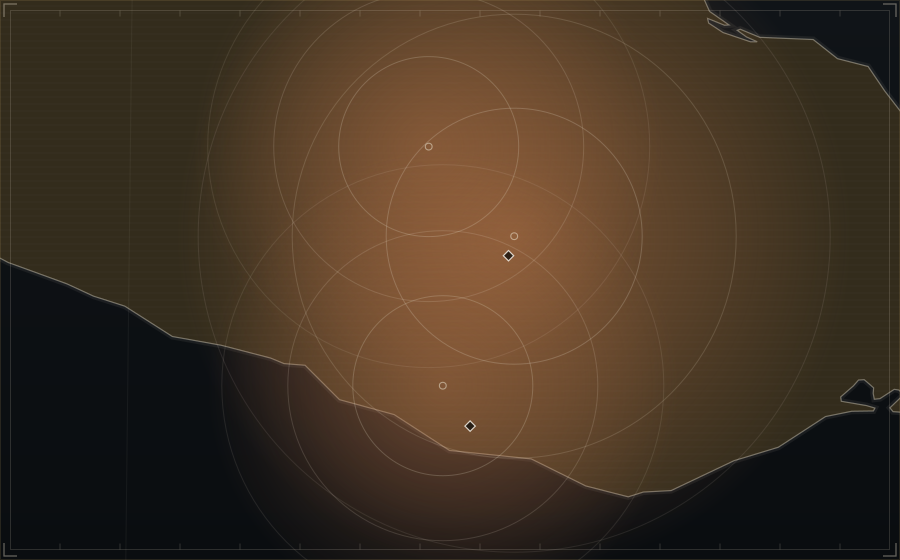
- Where
- The Mixteca of Oaxaca, Puebla and Guerrero; migrant communities in northern Mexico and California
- Languages
- Mixtec languages: 529,593 speakers (2020 census)
- The codices
- Painted dynastic histories, including the life of Eight Deer Jaguar Claw (1063 to 1115), told from Tilantongo