Introduction · Canada, from Alberta to Quebec & Labrador
Cree
Nêhiyawak on the plains, with woods, swampy and moose Cree across the north and the Eeyou of James Bay: related peoples across the widest span of any First Nation in Canada.
The most widely spread First Nation in Canada, from the prairies to James Bay, whose language remains the most spoken Indigenous language in the country.
Preliminary researchHow to read this
Cree country crosses half a continent: plains Cree in Alberta and Saskatchewan, woods and swampy Cree through the boreal north of Manitoba and Ontario, and the Eeyou of Eeyou Istchee, the James Bay country of Quebec. The 2021 census counted 86,475 speakers of Cree languages, the most of any Indigenous language in Canada.
Cree history is braided into the fur trade from its first years, as traders, provisioners and middlemen of the northern rivers; Cumberland House, founded on an old Cree gathering place in 1774, is Saskatchewan's oldest continuously inhabited community. The treaties of the plains and the north carry Cree names and Cree negotiators.
The James Bay and Northern Quebec Agreement of 1975, signed by the Eeyou after Quebec began damming their rivers, was Canada's first modern treaty; today the Cree Nation Government runs schools, clinics and a police service across Eeyou Istchee, and Cree-language radio and syllabic print culture remain everyday facts of the north.
This is an introduction, the first layer. A full collection, like the Mapuche collection that opened this atlas, follows as research and review are completed for each people.
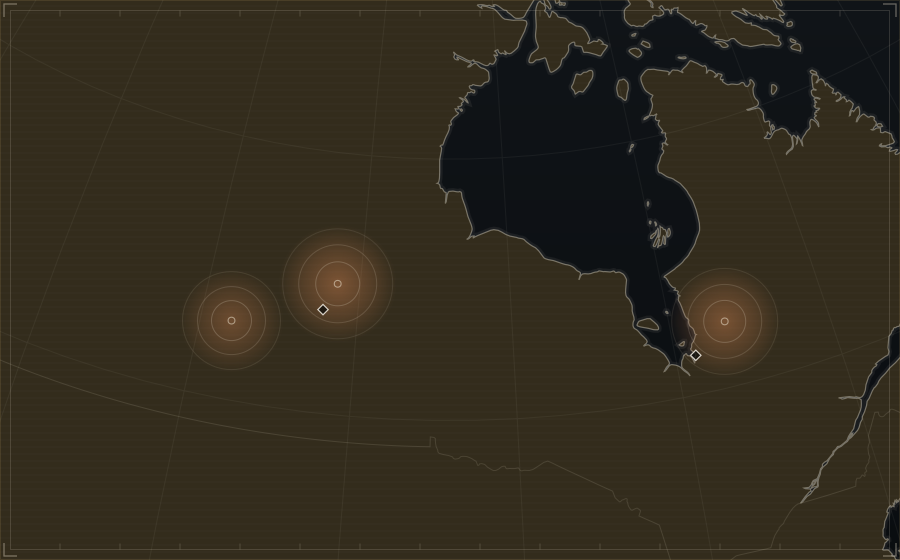
- Where
- Alberta, Saskatchewan, Manitoba, Ontario and Quebec; Montana's Rocky Boy reservation
- Language
- Cree languages: 86,475 speakers (2021 census), the most spoken Indigenous language in Canada
- Milestone
- The James Bay and Northern Quebec Agreement (1975), Canada's first modern treaty