Introduction · Across the Arctic, from Alaska to Greenland
Inuit
The people of the circumpolar Arctic, from Alaska across Canada to Greenland, bound by related languages, a shared maritime culture, and modern institutions of self-government that reach across four national borders.
Preliminary researchHow to read this
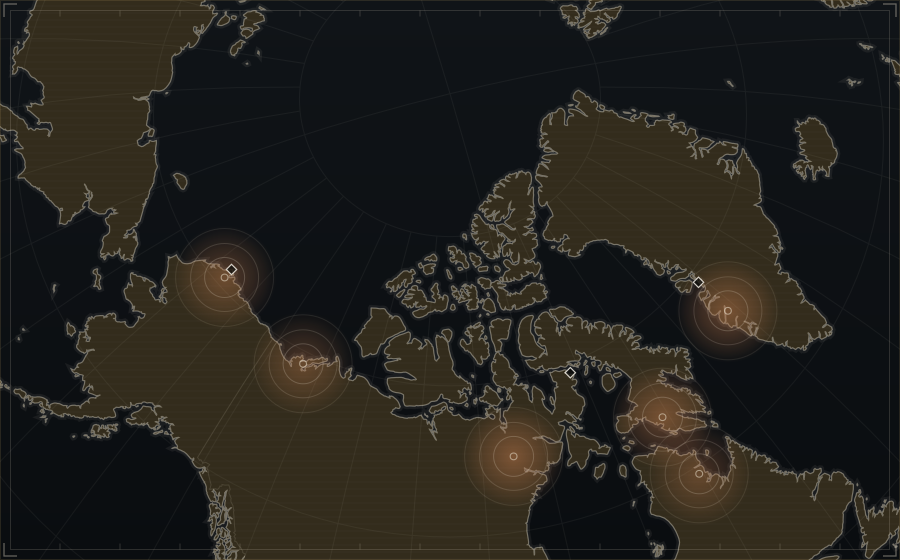
Inuit homelands arc across the top of the hemisphere: Iñupiat in northern Alaska; Inuit across Arctic Canada in the four regions together called Inuit Nunangat; Kalaallit in Greenland, where roughly ninety percent of the 57,000 people are Inuit. Canada's 2021 census counted 70,545 Inuit, most living in Inuit Nunangat.
A maritime hunting civilisation adapted to the hardest inhabited climate on Earth, the qajaq, the dog team, snow-built shelter, clothing engineering that modern materials only recently matched: Inuit met whalers, traders, missionaries and state administrators over four centuries, and in the twentieth endured relocations and residential schooling whose consequences are still being worked through.
The present is institutional as much as cultural: the Inuit Circumpolar Council has linked Alaska, Canada, Greenland and Chukotka since 1977; land-claims agreements produced Nunavut in 1999, a Canadian territory with an Inuit majority; Greenland's self-government works in Kalaallisut, the official language. Inuktut is taught, broadcast and legislated for on a scale most Indigenous languages are still fighting toward, while climate change rewrites the sea ice beneath all of it.
This is an introduction, the first layer. A full collection, like the Mapuche collection that opened this atlas, follows as research and review are completed for each people.
- Where
- Circumpolar Arctic: Alaska, Canada (Inuit Nunangat), Greenland, Chukotka
- Languages
- Inuktut: Inuktitut and related varieties; Iñupiaq in Alaska; Kalaallisut, official in Greenland
- People
- 70,545 in Canada (2021 census) · ≈90% of Greenland's 57,000 people