Introduction · La Guajira: Colombia & Venezuela
Wayuu
Wayuu, “people” in Wayuunaiki; the Spanish colonial name “Guajiro” survives in the peninsula's name, La Guajira.
The most numerous Indigenous people of both Colombia and Venezuela, herders, weavers and traders of the desert peninsula their border crosses but never divided.
Preliminary researchHow to read this
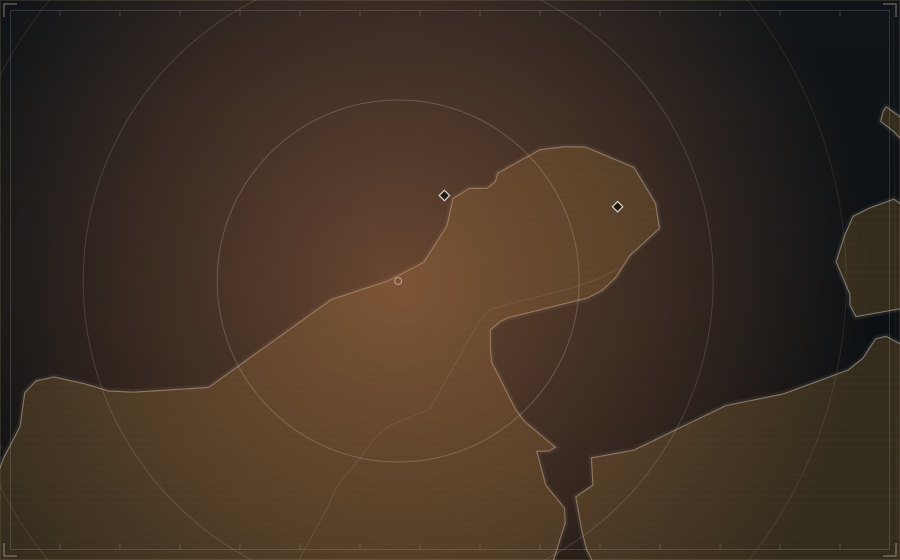
Wayuu country is La Guajira: the desert peninsula at South America's northern tip, where goat herds move between scattered rancherías, matrilineal clans hold the land, and the woven mochila bag carries a family's designs to the world. Colombia's 2018 census counted 380,460 Wayuu, the country's largest Indigenous people, and Venezuela's 2011 census counted 413,437 across the border.
The Wayuu were never conquered in the colonial era: they took the horse, the goat and the gun from the newcomers and held the peninsula, trading with Dutch and English smugglers on their own terms. The border drawn through their land in the republican age remained, in Wayuu practice, a line to cross, one people with citizenship papers from two states.
The present is harder arithmetic: drought, the crisis-driven return of Wayuu from Venezuela, and long fights over water, coal mining and royalties at one of the world's largest open-pit coal mines. Wayuu women, the weavers, and the clan mothers, remain the people's public face and much of its leadership.
This is an introduction, the first layer. A full collection, like the Mapuche collection that opened this atlas, follows as research and review are completed for each people.
- Where
- La Guajira peninsula: Colombia and Venezuela
- Language
- Wayuunaiki: an Arawakan language spoken across the peninsula
- People
- 380,460 in Colombia (2018 census) · 413,437 in Venezuela (2011 census)