Introduction · Guna Yala, Panama
Guna
Also written Kuna; their autonomous territory is Guna Yala, formerly San Blas, and their language is dulegaya.
The island nation within Panama that won its autonomy by revolution a century ago, and whose mola textiles carry Guna design around the world.
Preliminary researchHow to read this
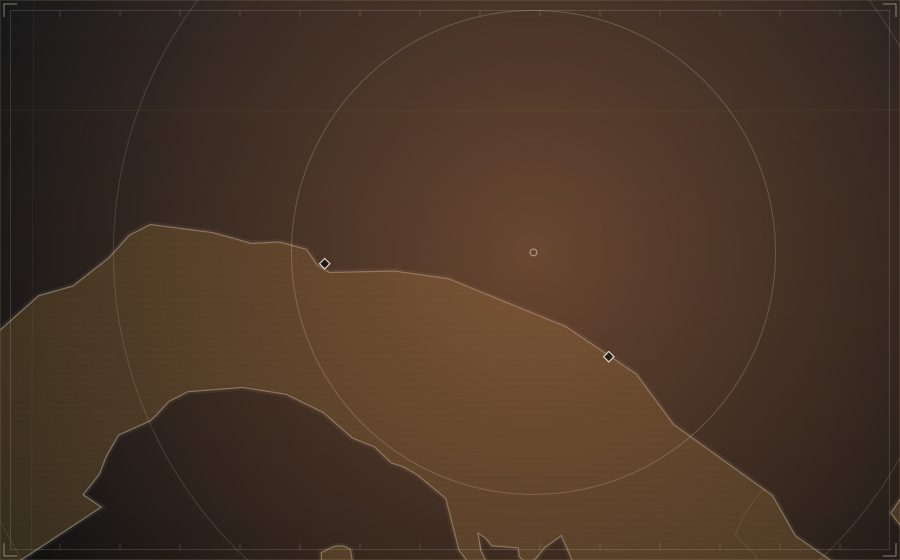
Guna country is a chain of coral islands and a strip of forested coast along Panama's Caribbean shore, governed as the comarca of Guna Yala by the Guna General Congress. Panama's 2010 census counted 80,526 Guna, nearly a fifth of the country's Indigenous population, with further comarcas inland and communities across the Colombian border.
Autonomy was taken, not granted: in February 1925 the Dule Revolution rose against police repression of Guna dress and ceremony, and the settlement that followed made Guna Yala the hemisphere's earliest secured Indigenous self-rule. The mola, the layered and cut cloth panel sewn by Guna women, became both the emblem the police had tried to ban and the nation's best-known art.
The Guna govern the questions of this century on their own terms too: Gardi Sugdub, an overcrowded low island, organised the region's first planned community move to the mainland in 2024 as the sea rises, with the congress, not the state, deciding how it would be done.
This is an introduction, the first layer. A full collection, like the Mapuche collection that opened this atlas, follows as research and review are completed for each people.
- Where
- Guna Yala comarca: the San Blas islands and coast, plus inland comarcas
- People
- 80,526 in Panama (2010 census), nearly a fifth of Indigenous Panamanians
- Milestone
- The Dule Revolution of 1925 secured the hemisphere's earliest Indigenous autonomous territory